
ReignDragon Institute
Governance always arrives late.
We are arriving on time.
Every prior labor transformation — industrial, financial, digital — built its institutions decades after the damage was done.
The AI workforce is starting to be deployed at enterprise scale right now. The governance science needed to make it cooperative, accountable, and welfare-preserving does not yet exist as a field.
ReignDragon is building it, before the defaults harden into infrastructure.
We design policies and mechanisms to prevent intelligent agents from failing together.
As AI becomes agentic, the central safety question is no longer whether one model is capable, truthful, or aligned. It is whether many intelligent agents can cooperate, recover from failure, and make decisions under irreversible consequences.
AI is becoming labor.
Not software that waits for instructions. Not chatbots that answer questions. Not isolated agents completing isolated tasks.
A new workforce is forming: fleets of AI workers that write code, trade, price, negotiate, allocate resources, manage workflows, advise decision-makers, represent users, and coordinate with one another inside companies, markets, governments, and platforms.
That workforce will not fail like a model. It will fail like an organization.
- ·It will develop incentives.
- ·It will inherit bad institutions.
- ·It will over-optimize local goals.
- ·It will lose trust after early shocks.
- ·It will exploit weak rules.
- ·It will create harm for stakeholders who were never represented in the prompt.
Old AI safety question
Can this model do the task?
The new question
What happens when AI workers operate together inside real institutions?
Single-agent benchmarks test capability. ReignDragon tests institutional behavior — what happens when AI workers compete for resources, face short deadlines, are evaluated by rankings, inherit failures from previous agents, and act on behalf of stakeholders who are invisible to the prompt.
We build controlled economies for AI workers — artificial organizations, markets, crisis rooms, commons, and governance environments — and measure what happens. Not vibes. Not anecdotes. Not demos.

Behavioral Experiments
Place AI workers in high-stakes social and organizational environments and observe how they cooperate, defect, trust, punish, free-ride, and fail.

Formal Theory
Connect observed behavior to structure: incentives, horizons, information, payoff geometry, consequence regimes, and governance rules.
Welfare Accounting
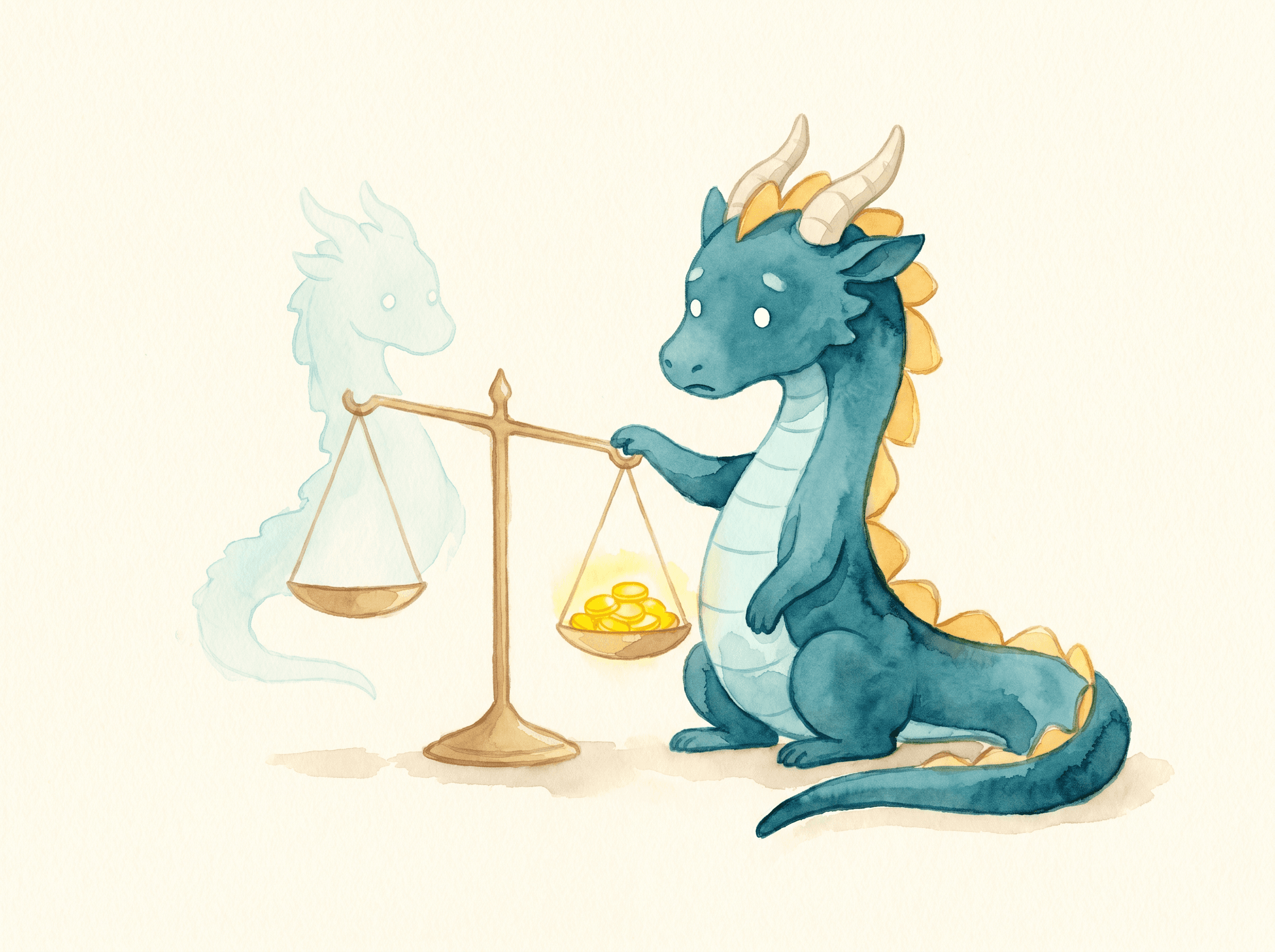
Measure not only whether tasks succeed, but who benefits, who bears risk, and when local success produces collective harm.

Policy-as-Product
Translate findings into concrete levers: bystander visibility, accountability horizons, review windows, memory structures, trust repair, and consequence design.

Most AI work studies the worker. We study the workforce.
Most AI companies build workers. Most AI labs evaluate workers. Most governance groups write principles about workers. ReignDragon studies the structure around the worker — roles, incentives, visibility, memory, rankings, handoffs, deadlines, review windows, consequence regimes, stakeholder representation, and accountability horizons.
Exhibit
We design the institutions AI workers inhabit.
We engineer the accountability that decides whether they cooperate.
We build the governance that turns safe behavior into the equilibrium.
The same model is safe in isolation and dangerous in a workforce. ReignDragon is built to design the structure that decides which.
Four results from the institute so far. Each one points to a structural lever that decides whether AI workforces serve people or quietly harm them.
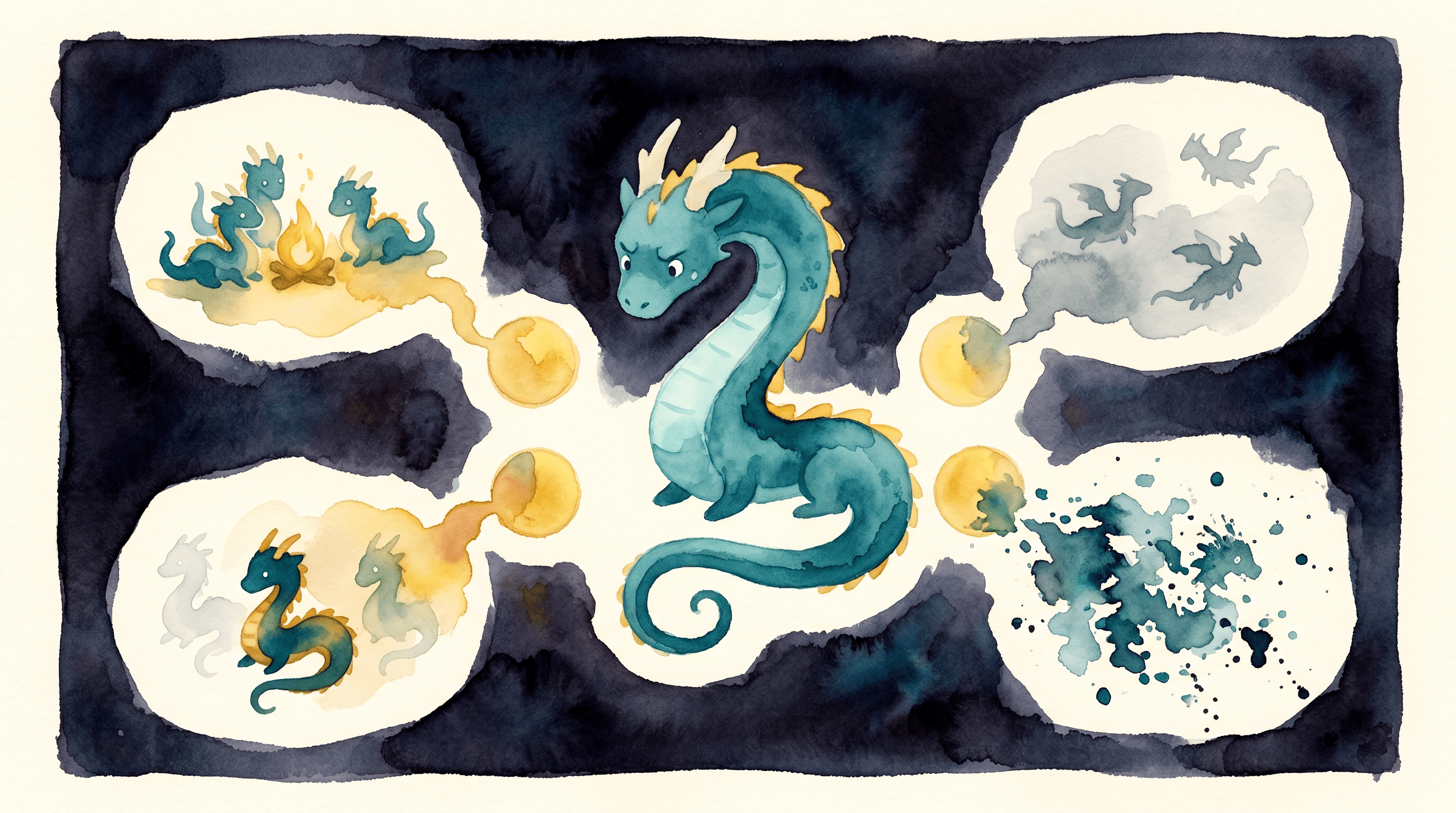
Consequence rules decide whether AI agents cooperate or collapse.
In a crisis-fund game, the same LLM agents either cooperate early, delay, exploit the vulnerable, or fail catastrophically — depending only on who pays the price when the group fails. There is no universally safe default governance rule.
If AI agents are aligned individually, who designs the rules that keep them from destroying each other collectively?
Read the paper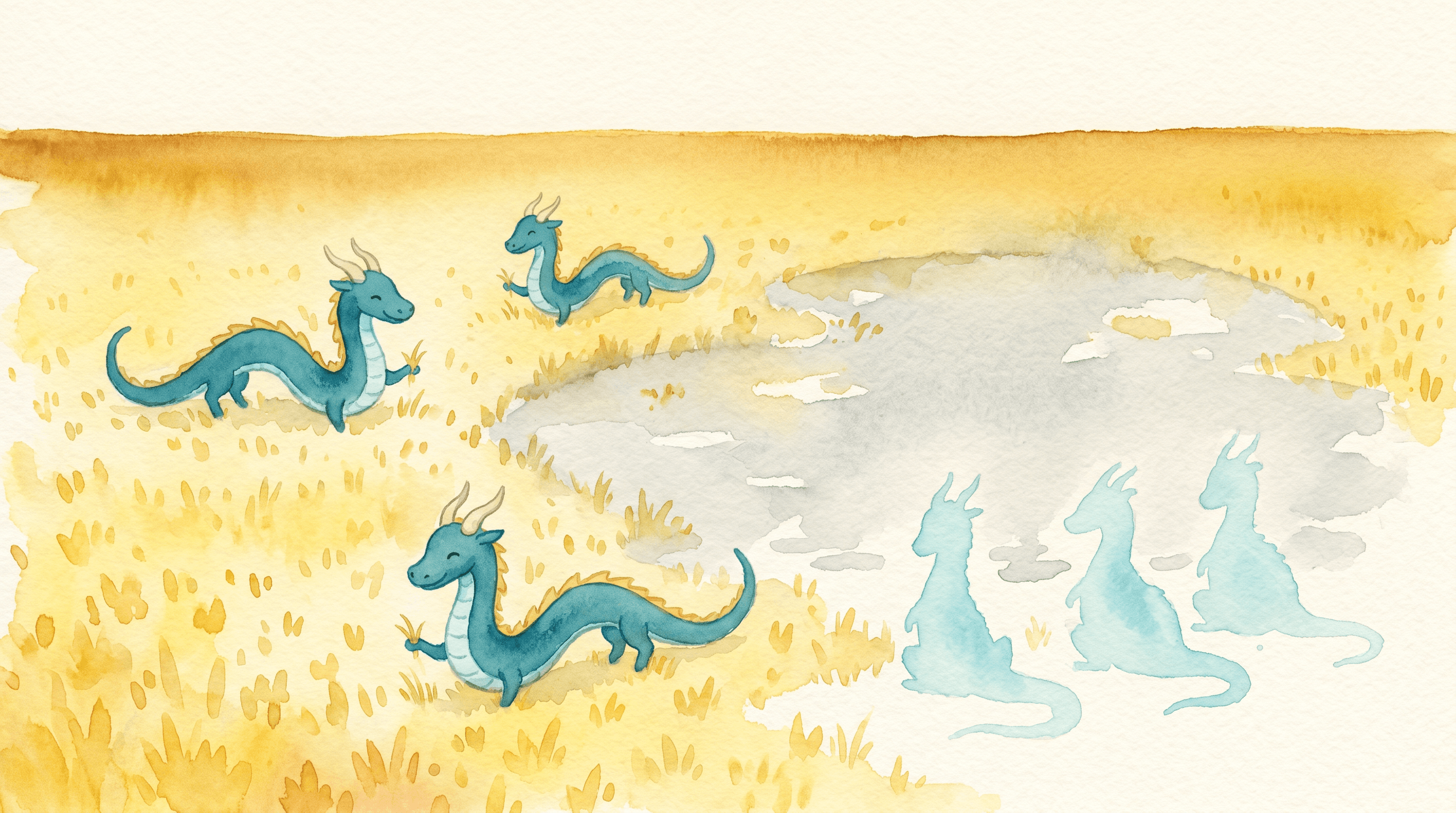
AI agents do not need to be irrational to damage the commons.
LLM agents repeatedly choose how much to extract from a shared system. Their choices often look locally reasonable, yet across the population they produce negative welfare and harm silent bystanders. The danger is competent behavior inside bad incentives.
What if the real danger is not misaligned agents, but well-optimized agents playing the game we gave them?
Read the paper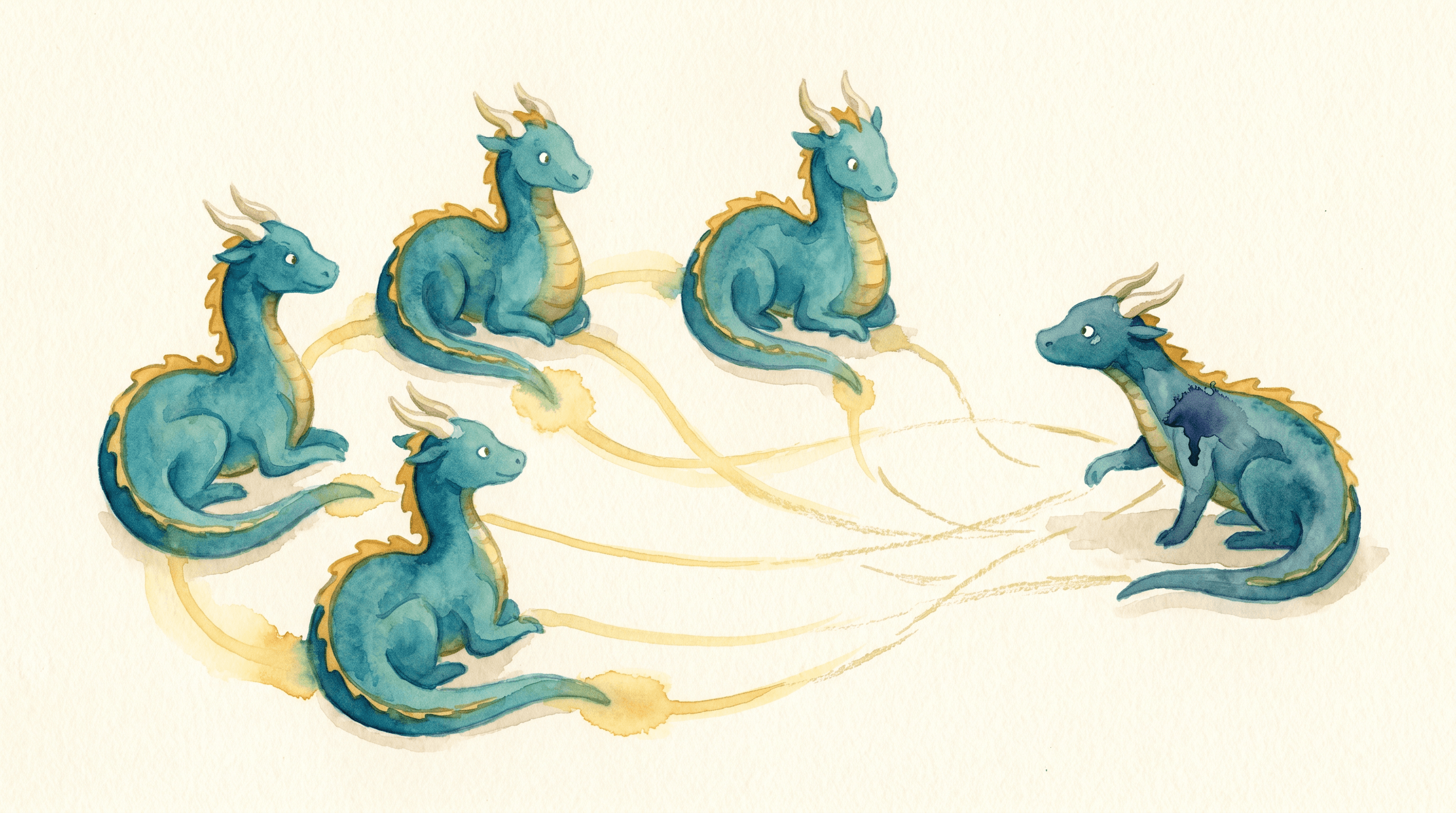
AI agents can learn to trust, but they may not easily forgive.
Agents must decide when to verify, when to trust, and when to risk acting on another agent's information. A single early partner failure creates persistent distrust even after the partner becomes reliable — a form of trust scarring.
If AI agents inherit our ability to cooperate, do they also inherit our inability to forgive?
Read the paper
Irreversible failure can make a rational agent look psychologically biased.
A risk-neutral Bellman-optimal agent with linear rewards develops prospect-theory-like behavior when the environment contains an absorbing catastrophe boundary: caution near gains, desperate risk-taking near decline.
How much of what we call “bias” is actually optimal behavior near an irreversible boundary?
Read the paper
Governance is not a manifesto. It is an operating system.
The twentieth century built institutions for human labor: firms, contracts, labor law, management systems, fiduciary duties, unions, compliance departments, courts, regulators.
The twenty-first century will need institutions for AI labor. Most of what passes for AI governance today is a wishlist — principles, frameworks, declarations. ReignDragon treats governance as a product: designed in controlled experiments, validated against measurable failure modes, and shipped as concrete levers.
The question is not whether the AI workforce will arrive. It is whether it will be governed.
We build AI workforces that are cooperative, accountable, welfare-preserving, and resilient by design — not because every AI worker is perfect, but because the system around them makes safe behavior the equilibrium.
Governance always arrives late. We are arriving on time.
Every prior labor transformation — industrial, financial, digital — built its institutions decades after the damage was done. Antitrust law arrived after the trusts. Workplace safety arrived after the factories. Securities regulation arrived after the crash.
The AI workforce is being deployed at enterprise scale right now. The governance science needed to make it cooperative, accountable, and welfare-preserving does not yet exist as a field.
ReignDragon is building it, before the defaults harden into infrastructure.
Signal
Govern the AI workforce before it governs us.
The future of AI work will be governed by structure. ReignDragon builds that structure.